
No Cavalry in a Darknest? Why Infantry is worth considering
One scouting example: what missing Cavalry suggests, why a formation name does not specify a composition, and where the troop-counter triangle stops helping.
Published
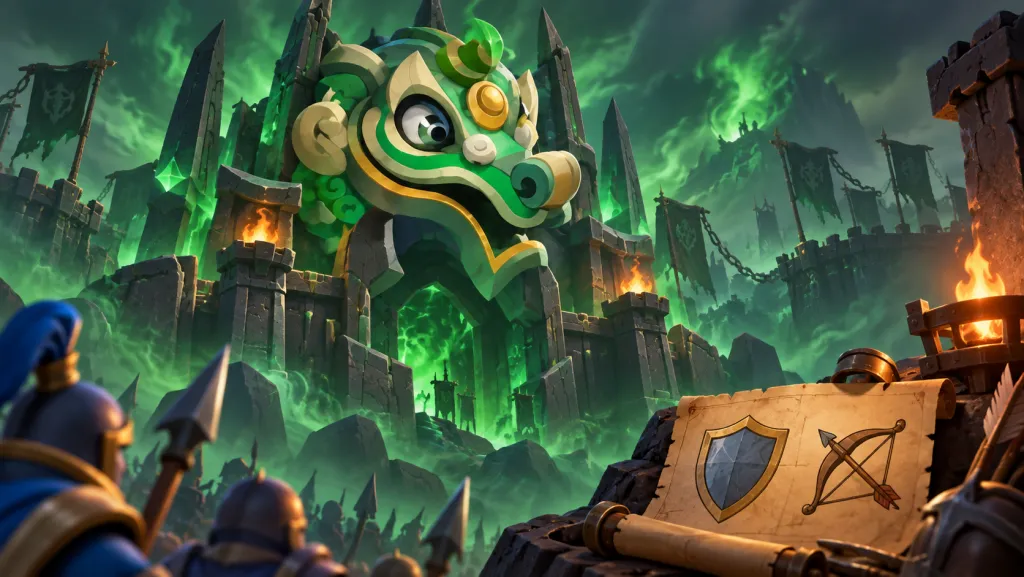
A Darknest scout report shows Infantry and Ranged defenders, but no Cavalry. Chat suggests sending Infantry. That sounds odd because they will also face enemy Infantry. The choice has a clear logic if you start with IGG's explanation of troop counters.
We will examine a hypothetical case with no Cavalry. It helps choose an initial option to discuss with the rally leader. That feature alone promises neither victory nor a ready-made troop percentage.
Three types, three directions of advantage
IGG's official Darknest guide gives this basic cycle: Infantry counters Ranged, Ranged counters Cavalry, and Cavalry counters Infantry. Each of these types has a favorable target and its own counter.
Below is the guide's original chart. The relevant part is the left-hand triangle with shield, bow and horse icons. The arrows between them indicate the direction of advantage.

What changes when Cavalry is absent
Suppose the report contains only two main types: Infantry and Ranged. Reading the triangle, your Infantry has an advantage against Ranged, while the target lacks Cavalry, the type that counters your Infantry. That makes Infantry a logical first option to consider.
This chooses a starting point, not a battle result. The example contains no army stats, heroes or other necessary details. Even a careful type-based conclusion cannot become a promise that sending all Infantry will guarantee victory.
Check the premise itself. No Cavalry and less Cavalry than the other types are different cases. If any is present, even an apparently small amount, the simplified example no longer describes the whole scout report. Do not quietly replace zero with a convenient-looking count.
Why Infantry Phalanx is not a complete answer
In a public beginner discussion on Reddit, replies answer a troop-counter question with a formation name. The author then asks separately which types and quantities to send. This exposes a gap: people may have understood the short advice differently.
Ask two separate questions: what composition are we assembling, and which formation are we choosing? An answer to one is not a full plan. A confident percentage in a comment also needs checking against your scout report and rally leader's capabilities.
IGG's explanation also goes beyond the triangle: it considers defending troops, heroes and combat bonuses. However, this is a 2019 guide. We are not applying its old level limits or numerical recipes here.
Turn advice into a plan you can examine
First record the starting information. Save the complete scout report and explicitly name the absent type. That is easier to discuss than saying there seem to be few horses without showing the report.
Then ask for the reasoning. A useful answer connects the proposed composition with the observed defence and your team's capabilities. I always do it this way does not establish matching conditions.
After an attempt, save the result alongside the composition. To compare options, decide in advance which variable to change. With a different leader, army and target at the same time, the cause of a result is difficult to identify. This is a method for examining your attempts, not a battle guarantee.
The central habit is noticing the missing type as well as the largest group. A player's Castle needs a separate defensive assessment. Our rally trap guide explains why total Might cannot reveal it all.