

Bjorn or Hobert: why a 2000 factor is not enough
Hobert's Health-loss condition and Bjorn's 1700 and 2000 before and after Awakening: which skill lines to compare before spending shards on infantry heroes.
Published
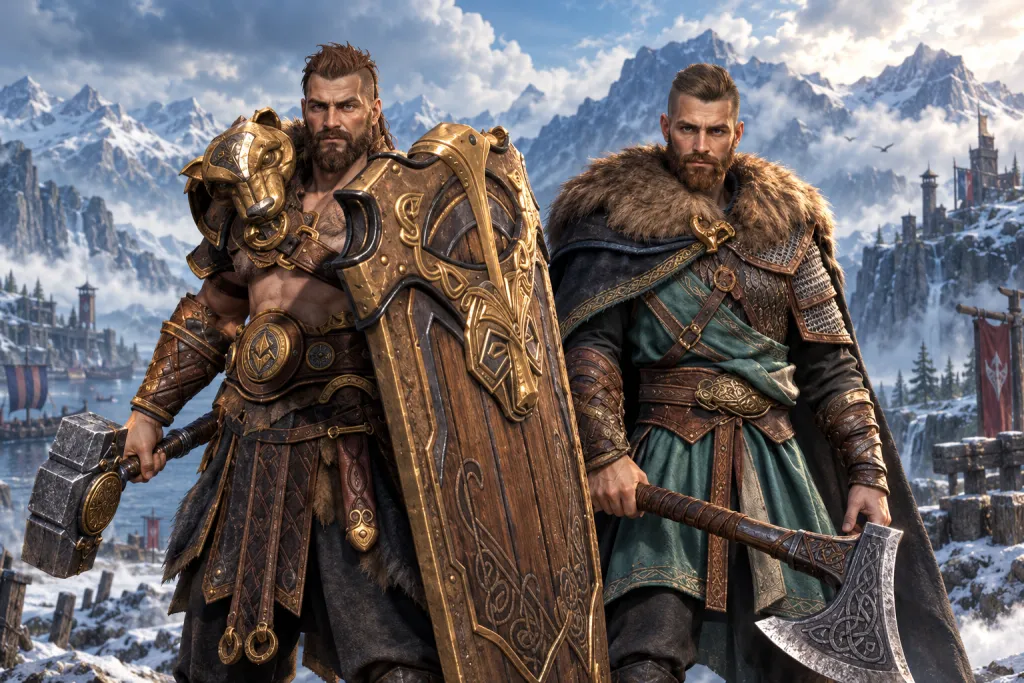
The 2000 on Bjorn's card does not tell you whether to develop him or Hobert first. Start by comparing the skill level and condition, using the approach explained in our Viking Rise SP hero guide. Here we apply it to two infantry commanders: one hero's bonus depends on Health lost, while the other's larger factor appears after Awakening.
Hobert: the bonus starts with a condition
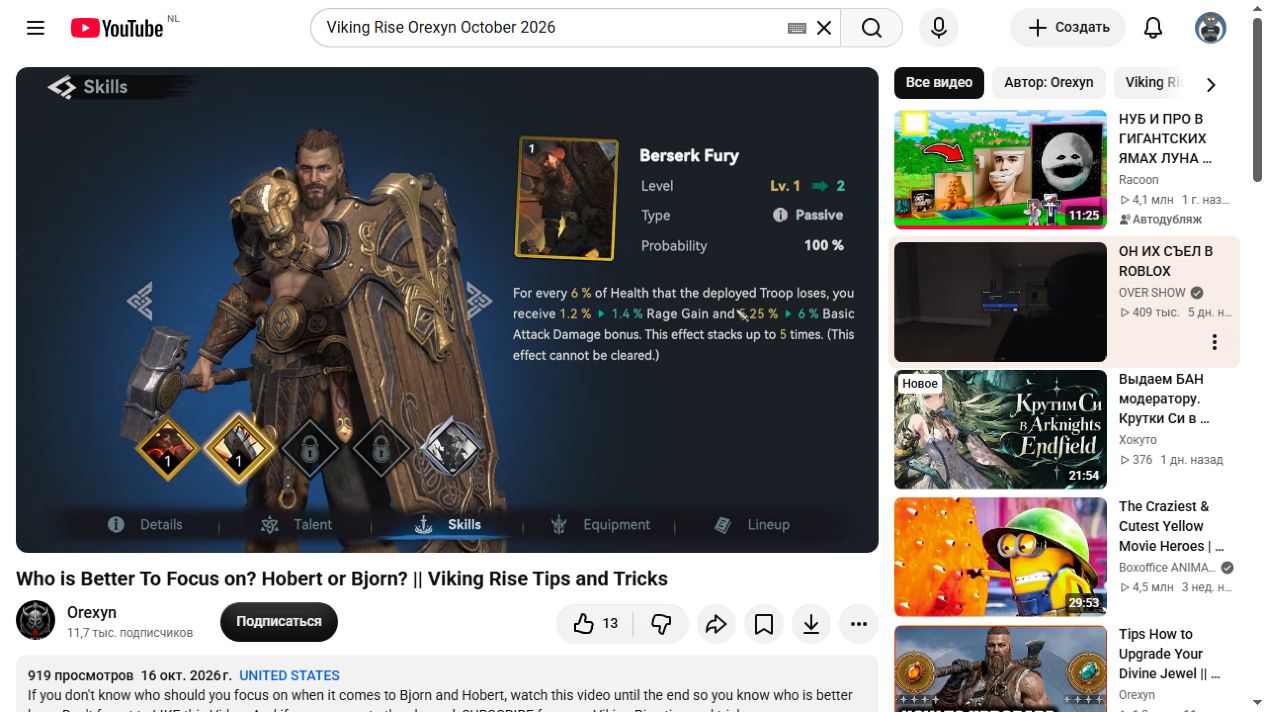
Orexyn's recording from October 16, 2026 shows Hobert's Berserk Fury. It is labelled Passive: a passive skill. Its description ties the bonus to every 6% Health lost by the deployed troop. Health here means troop health, not hero level. Reading only the bonus line and skipping the condition misses an essential part of the effect.
The frame has Lv. 1 → 2 selected. Rage Gain shows 1.2% → 1.4%, while Basic Attack Damage shows 5.25% → 6%. The value left of the arrow belongs to the first level; the value on the right belongs to the next. A green number does not mean that the increase is already active for the displayed hero.
The description allows up to five stacks. That is the stacking limit for this particular bonus, not five free uses of any skill. The Health-loss condition is not advice to deliberately lose troops. Before choosing Hobert, establish which effect your troop needs and whether it can take effect during the fight you have in mind. Open Hobert's skill at full size.
Bjorn: 2000 appears after Awakening
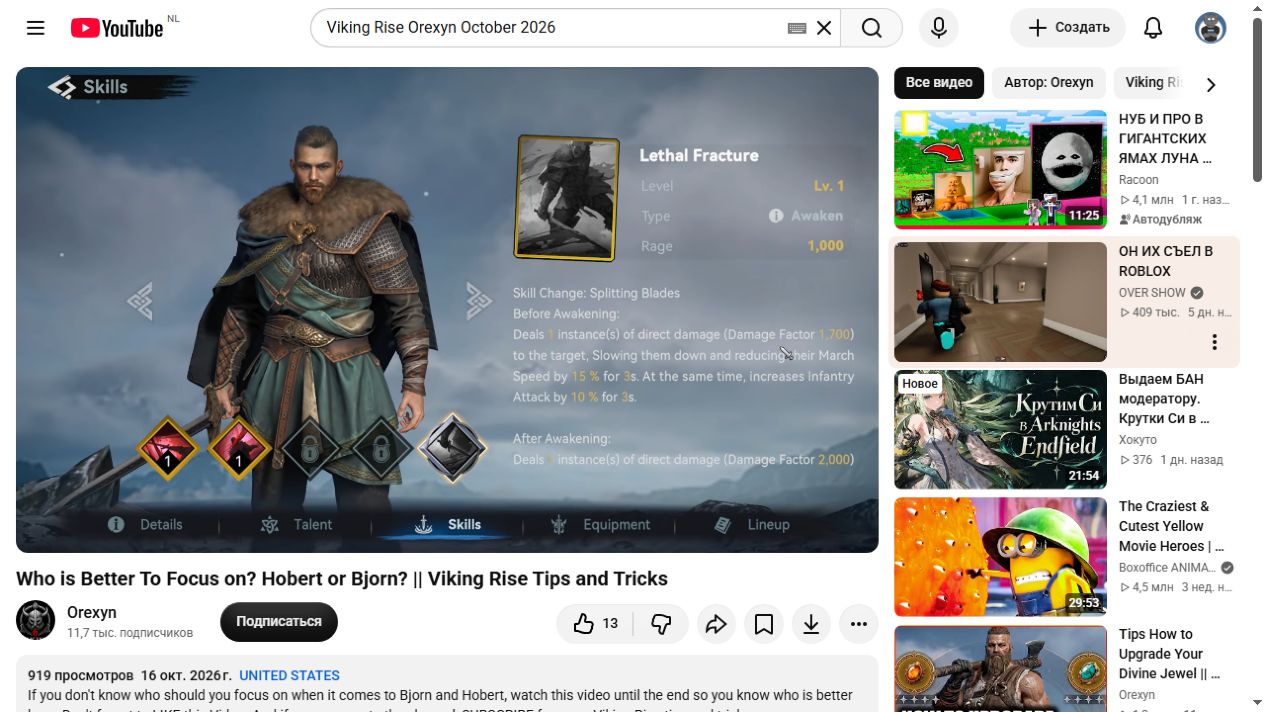
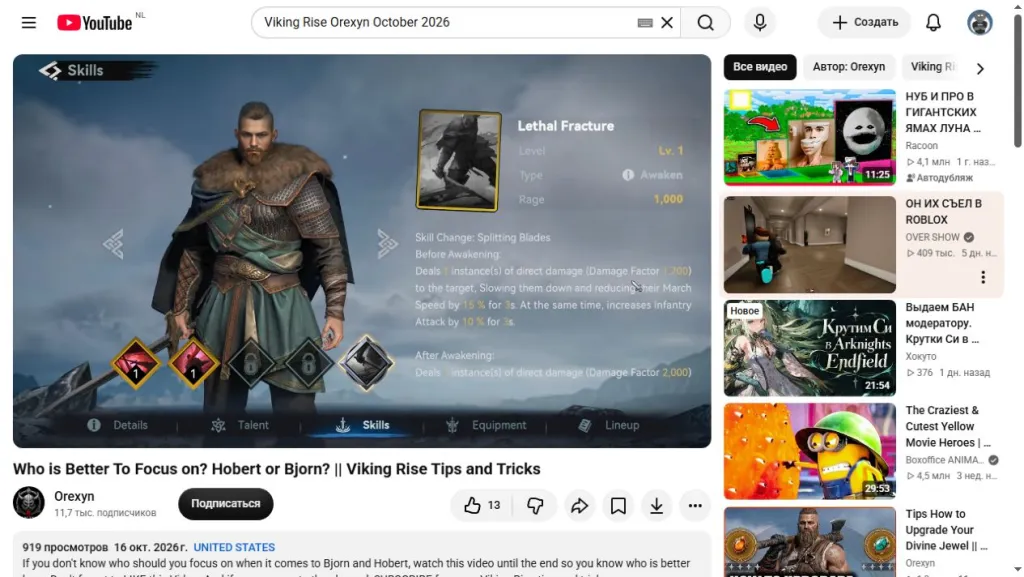
Bjorn's Lethal Fracture is open with the Awaken label: this is the Awakening card. It separately lists Before Awakening and After Awakening. The direct-damage entries show Damage Factor 1700 and 2000 respectively. These lines describe different states; viewing the second does not prove it is already unlocked on the account.
Damage Factor is the coefficient in an effect's description. A factor of 2000 cannot automatically be called 2000 soldiers killed or 2000 HP lost by the target. Nor can the 2000−1700 difference be treated as a measured advantage for the whole troop: that requires actual battle results under matching comparison conditions.
The same card lists Rage 1000, the Rage requirement. This helps separate the activation requirement from the damage coefficient. It does not tell you how many rounds your particular lineup needs to generate that Rage. Hobert's Rage Gain bonus and Bjorn's factor answer different questions, so simply comparing the larger numbers is insufficient. Open Bjorn's Awakening card.
What to compare instead of one large number
First record the state actually available to you for each hero: the selected skill's level, Awakening and full effect description. Then write down what triggers the bonus and what it changes. In these examples, Hobert has a Health-loss condition and bonuses to Rage Gain and Basic Attack Damage; Bjorn has direct damage and a separate description for the awakened state.
Next decide what the pair needs to do, rather than judging either commander in isolation. When testing a replacement, keep the second hero, troops, additional skills, equipment and mount the same. Otherwise, a different report number will not identify which change caused it. This is a way to set up a comparison, not a promise that every battle will end identically.
Check external bonuses separately too. If your comparison involves Kingdom versus Kingdom, our KvK buff activation guide explains why earning a reward is different from having its bonus active. A result in one environment cannot be carried over to another without checking.
Checks before spending shards
Open your own cards and capture both the current level and the proposed upgrade. Read which resource the next action requires and assess that action's specific result. If you are comparing a future awakened Bjorn with your current Hobert, record that explicitly: it is a development plan, not a comparison of two heroes already ready to use.
The October 16 frames explain particular interface entries; they are not a new October 22 patch or our own game-client test. If the description changes, use the current text in your game. Two cards cannot identify a universally better hero, choose a partner for every season or establish the full development cost.