

Viking Rise KvK buffs: earning them is not the same as activating them
When preparation buffs take effect, where to read the condition and why a claimed reward does not prove that the bonus is active in your home city.
Published · Updated

Earning a KvK preparation buff does not mean it already works in your home kingdom. In the shown Baldr’s Redemption cycle, activation depends on relocating into the war. Our crafting-points guide explains which action earns points; here we examine the next step: when the earned bonus takes effect.
A percentage beside Buff does not confirm activation
KvK means Kingdom versus Kingdom. A buff improves a particular stat; its size and activation condition must be read separately. This example comes from Flóki918’s video published on 12 October 2026, showing the end of KvK10 preparation and subsequent entry onto the map. It describes one cycle, not a shared schedule for every server.
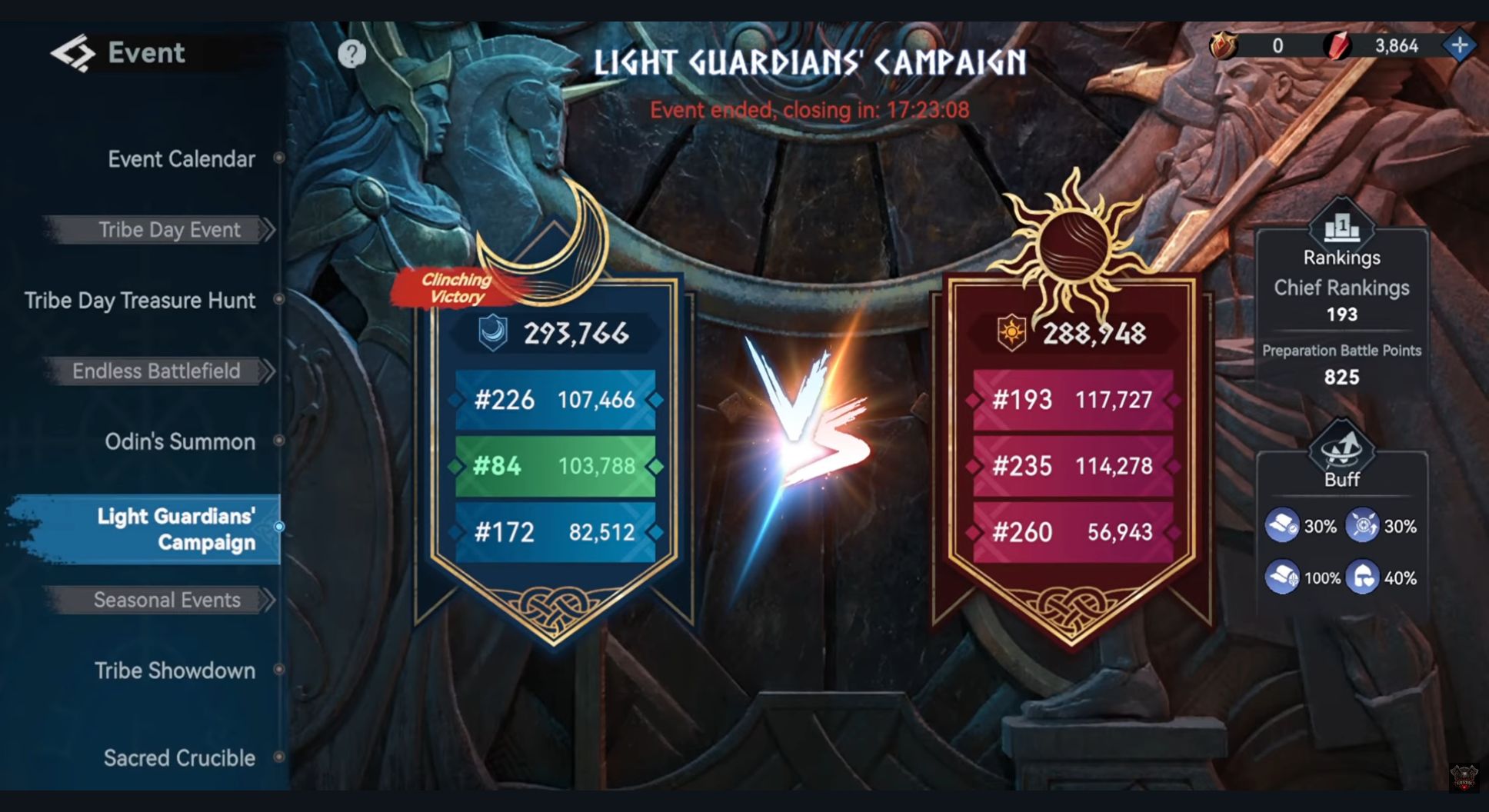
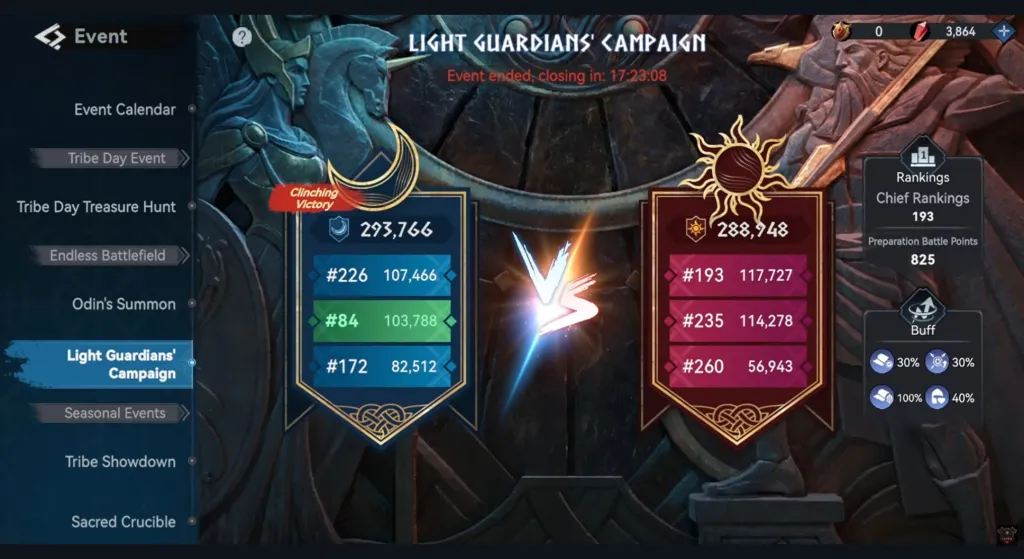
The Light Guardians’ Campaign overview already says Event ended. The blue team’s result is 293,766 and the red team’s is 288,948, with a separate Buff section on the right showing four values. This helps locate the earned bonuses, but the percentages alone do not tell you where they apply. A winning result beside a buff list is not proof that every operation in your home city has become faster. Open the overview at full size.
The activation condition sits above the reward table
Open Team Score Stage Rewards. The note above the table explains that earned buffs take effect when entering the war after relocating into Baldr’s Redemption and expire when the war ends. There are two boundaries: what starts the effect and what ends it. Claiming a reward does not remove either condition.
For example, the 35,000-point row shows Infirmary Capacity: +12%. A green tick in that row does not override the note above it. Before relying on extra capacity, establish that your city is in the required war and that your cycle’s rules describe the same effect. Open the reward table and rule at full size.
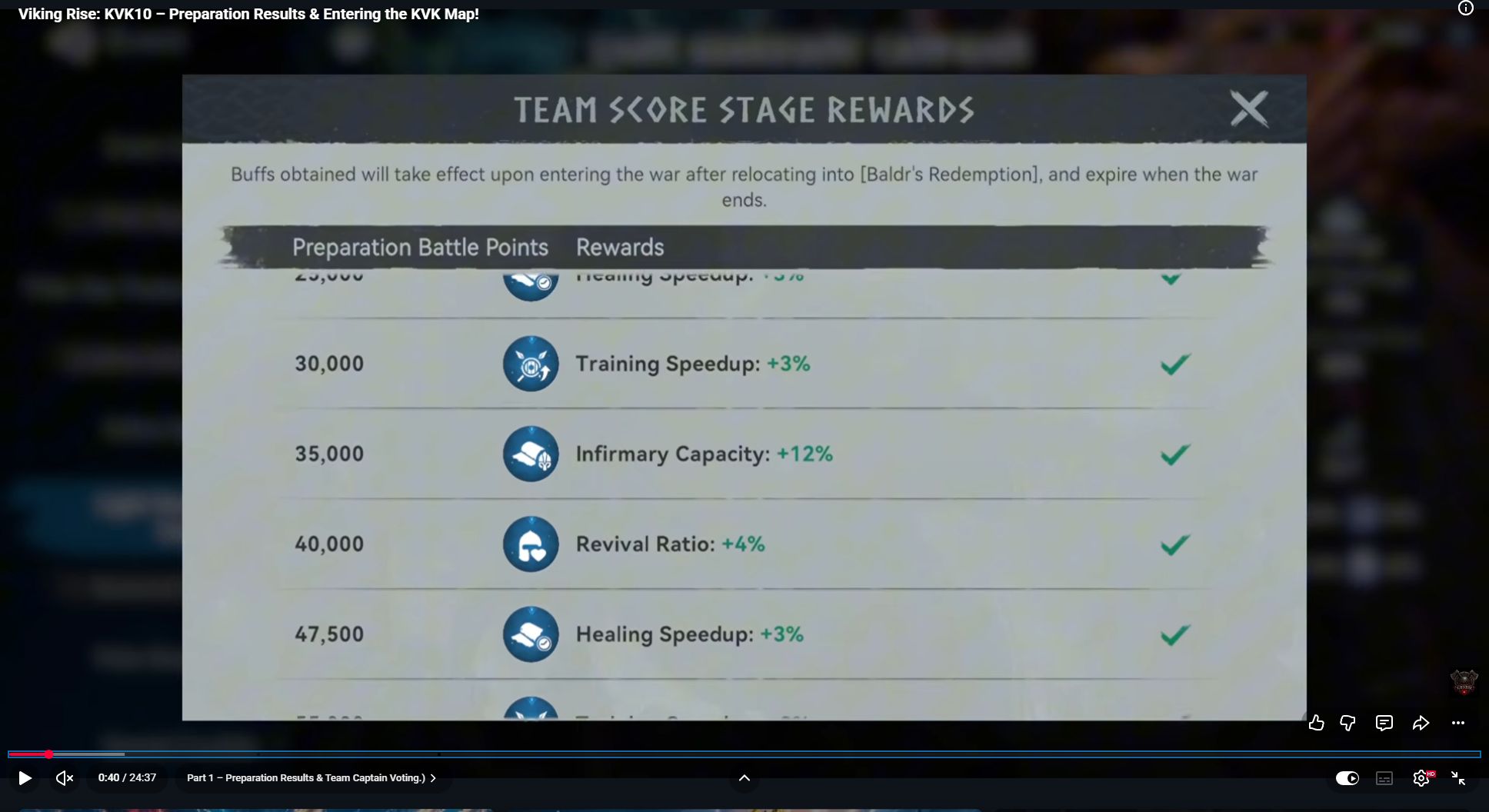
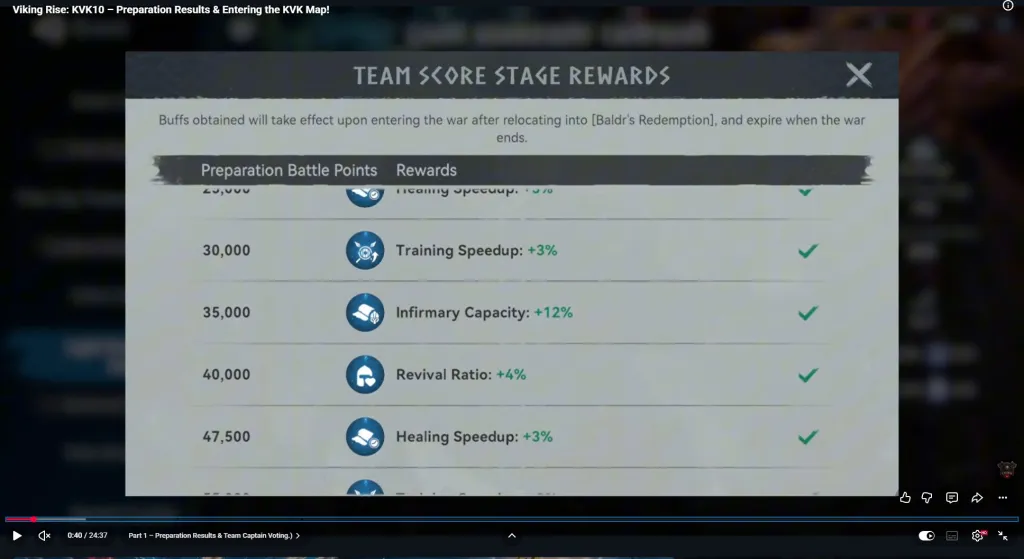
Other rows refer to different stats: 30,000 points shows Training Speedup: +3%, and 47,500 shows Healing Speedup: +3%. The names matter more than the percent sign alone. Training speed, healing speed and infirmary capacity answer different questions; the whole list cannot be read as one increase in army strength.
What to check before using your stock
Start with the campaign and stage name. Find the reward you intend to rely on, then read the full note above its table. Record the affected stat, the activation condition and when it expires. This prevents a temporary war rule from being mistaken for permanent city development.
If you plan to train troops for the next battle, check your city’s state and available bonus description after entry first. When comparing cost or time, use the same operation and troop quantity: different tiers or counts make the reason for a difference unclear. These frames establish the written condition, not a measurement on your account.
Assess the resources needed as well. A time bonus does not promise to preserve resource boxes. Our Quick Train guide explains when quick training and promotion can use Choice Resource Boxes automatically. Buff activation and resource consumption require separate checks.
What these percentages do not establish
Do not add visible reward steps to the final Buff panel without an explicit stacking rule. The +12% row describes one reward; it does not prove the total increase after every stage. Nor can it be converted into a fixed number of infirmary places without the starting capacity and the rules for other bonuses.
The frame also includes Revival Ratio: +4%, a separate revival stat. It does not promise the return of every lost troop or explain the full calculation. That requires separate loss and recovery rules. The practical point here is narrower: read when earned buffs activate and expire before performing the operation for which you need them.