

Russian Fishing 4 fish flags: weight, freshness and keepnet space
A qualifying mark, fish weight, freshness percentage and keepnet capacity mean different things. Read two original RF4 screens before selling your catch.
Published
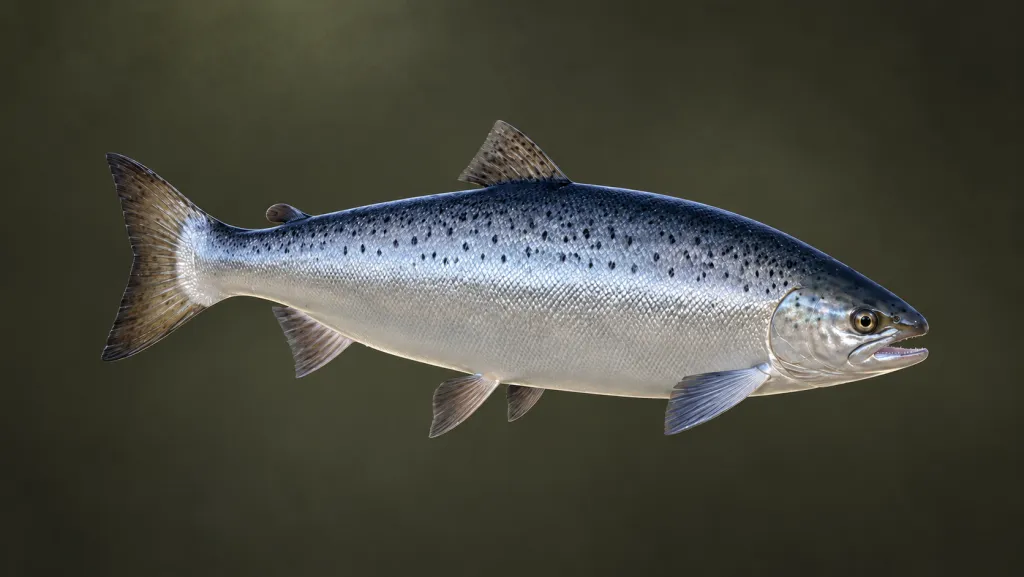
A fish has a flag, yet the market offer is still modest? The guide to checking café orders before selling your RF4 catch explains comparing offers for the same set of fish. Here we begin one step earlier: read the catch itself. The qualifying mark, weight, freshness and keepnet count answer different questions.
A qualifying mark does not set a fixed silver payment
A qualifying fish has reached the minimum valuation weight for its species. The official catch-valuation explanation says the full rate applies beyond that threshold; smaller specimens usually receive only a token value. The link leads to the Polish guide. Full rate does not mean the same price for every species or a fixed reward for any flag.
The same guide's introductory section identifies qualifying fish with a green mark and trophies with a yellow one. A trophy is a separate catch status, distinct from merely qualifying. Do not read a qualifying mark as a promise of a trophy, record or large payment. Check your specimen's card and the markings in the client version you use.
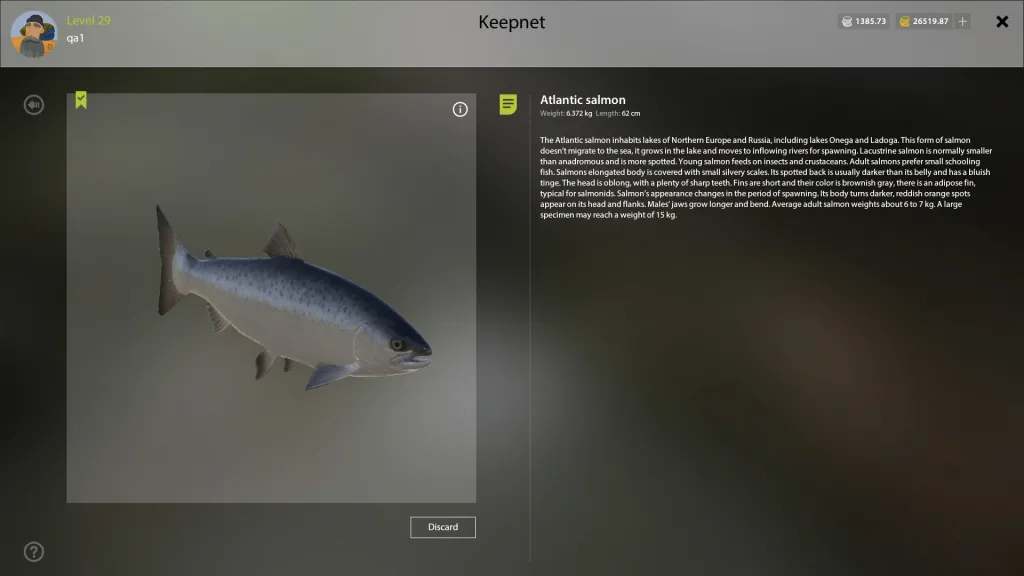
The full-size original card names the species Atlantic salmon, gives its weight as 6.372 kg and length as 62 cm. A check-mark flag appears at the upper left. The official caption explicitly identifies it as a qualifying catch mark. The fish model's apparent size does not replace these details: its 3D view can be inspected from different angles.
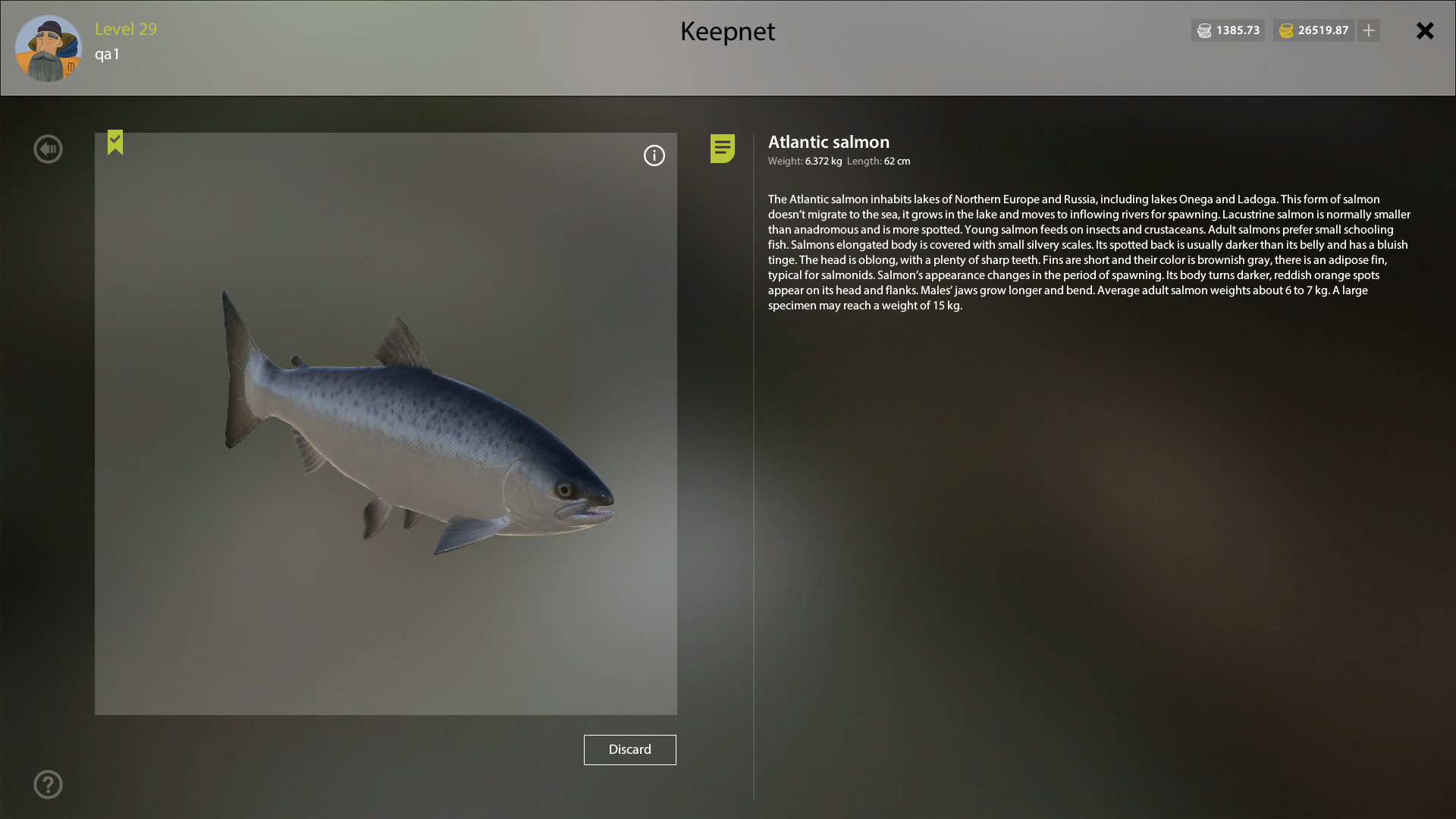
Preserve units when recording a catch: 6.372 kg equals 6,372 g, while 62 cm is length. If a café order specifies a weight range in grams, compare that with the selected fish's weight. Length or a large on-screen model alone cannot establish eligibility. The archived figures illustrate the fields; they are not a recommended catch size.
The percentage on a tile shows freshness
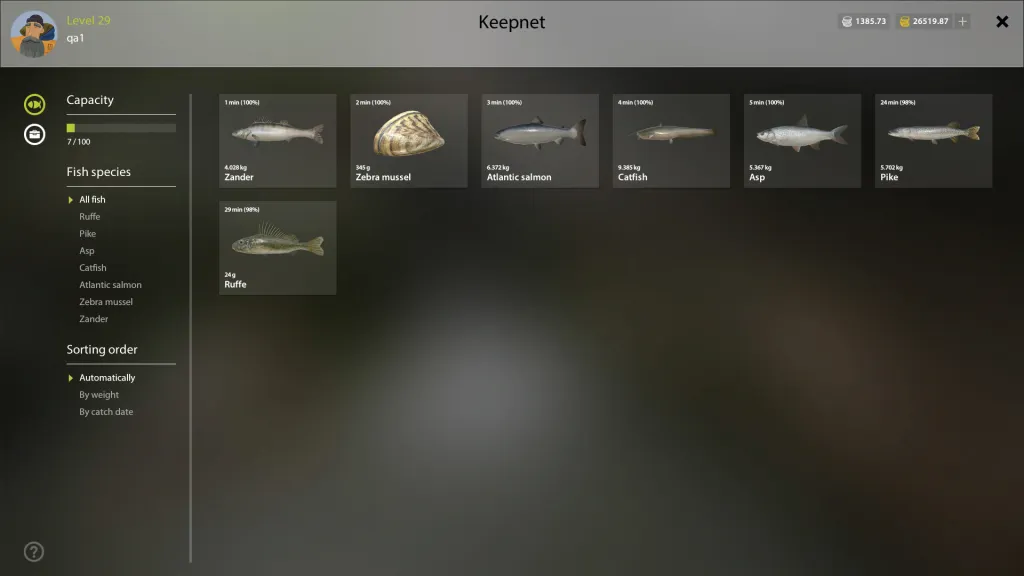
The full-size original keepnet shows 1 min (100%) beside the zander and 24 min (98%) beside the pike. The guide calls this the freshness indicator, describing a fish's condition in storage. One hundred percent here does not mean trophy chance, collection completion or the highest possible price. Species and weight have separate lines below.
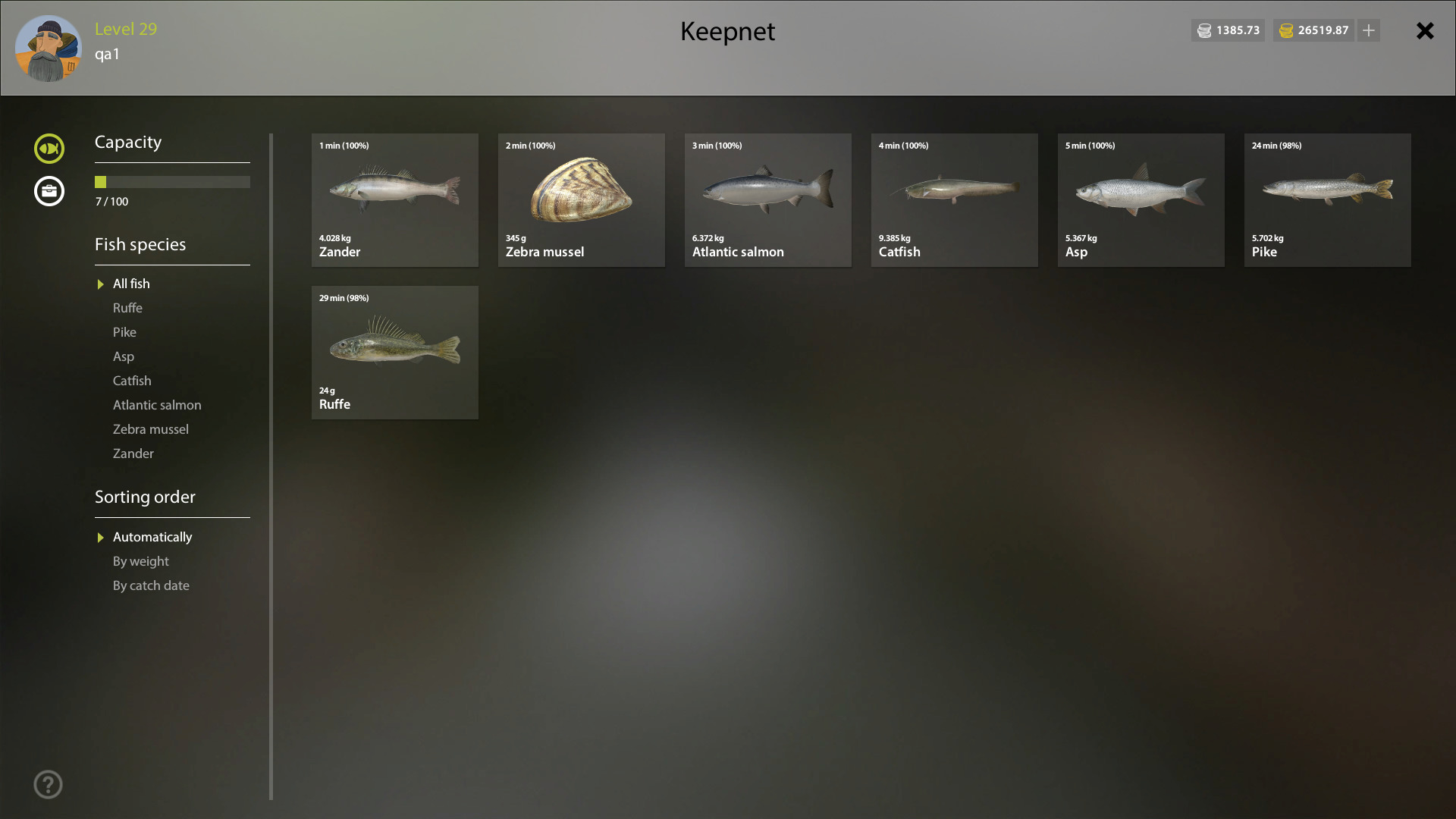
To check a specimen, open the keepnet with C or through Esc → Keepnet, then left-click its tile. The official keepnet section describes that sequence. Check your own bindings if you changed the controls. Species filters and sorting help locate the fish; inspect its details in the individual card.
7/100 counts fish spaces, not kilograms
Keepnet capacity limits the number of fish it can store. The illustrated screen uses seven of one hundred spaces. Catch weight is not substituted into this counter: a 4.028 kg zander and a 24 g ruffe occupy separate tiles, while the counter counts stored fish. Do not interpret the denominator 100 as an allowable weight for one fish or for your tackle.
The guide warns that a full keepnet cannot hold another fish: the next catch must be released. Check free spaces before continuing the session. Keepnet capacity does not determine what your rod can handle, however. If deliberately targeting larger fish, separately check tackle load and its weakest component.
Compare individual fish before selling
Record the species, weight with its unit, qualifying or trophy mark and freshness of the specimens you need. Then check the market offer for those exact fish and a suitable café order. Do not compare the whole keepnet's value with payment for a few selected specimens. A flag helps identify status; a selling decision still requires the conditions and actual valuation.
Keep fish for a clear purpose and watch storage time: spoiled catch sells for less. If a mark is present but the offer is low, first check species, weight, freshness and the selected set. Those details let you assess an offer before selling. One flag colour cannot establish today's silver per hour, the best water body or a guaranteed value for your next fish.