

20.5 kg and 2–10 g: rod strength is not casting weight in RF4
Rod Test, load capacity and the rod’s own weight are different fields. Read two original RF4 screens and add up rig components before casting.
Published · Updated
A large number in kilograms does not mean a rod can cast any heavy lure. Our RF4 guide to load and the weakest tackle component explains why you check the whole setup. Before casting, make another check: does the rig’s weight fit the rod’s casting weight range? Look at the grams and the field label, rather than the most impressive number on the card.
Test in grams refers to casting
A rod’s casting weight range is the stated weight range for the rig you cast. The English item card labels it Test. The official casting distance section says the rig’s weight should fall within this range. The link opens the Polish version of the guide. Check the range even when the rod’s strength appears suitable for the fishing you have in mind.
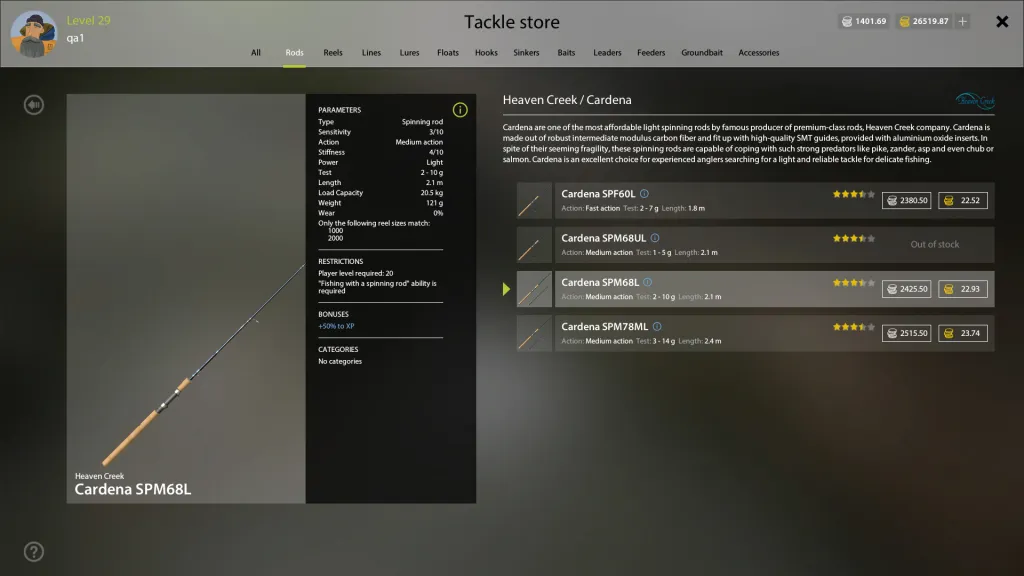
The full-size original card for the selected Cardena SPM68L has three entries: Test 2–10 g, Load Capacity 20.5 kg and Weight 121 g. The first gives the casting weight range, the second concerns rod strength and the third is the weight of the rod itself. Neighbouring models on the right have different ranges, so check the highlighted row and the full model name.
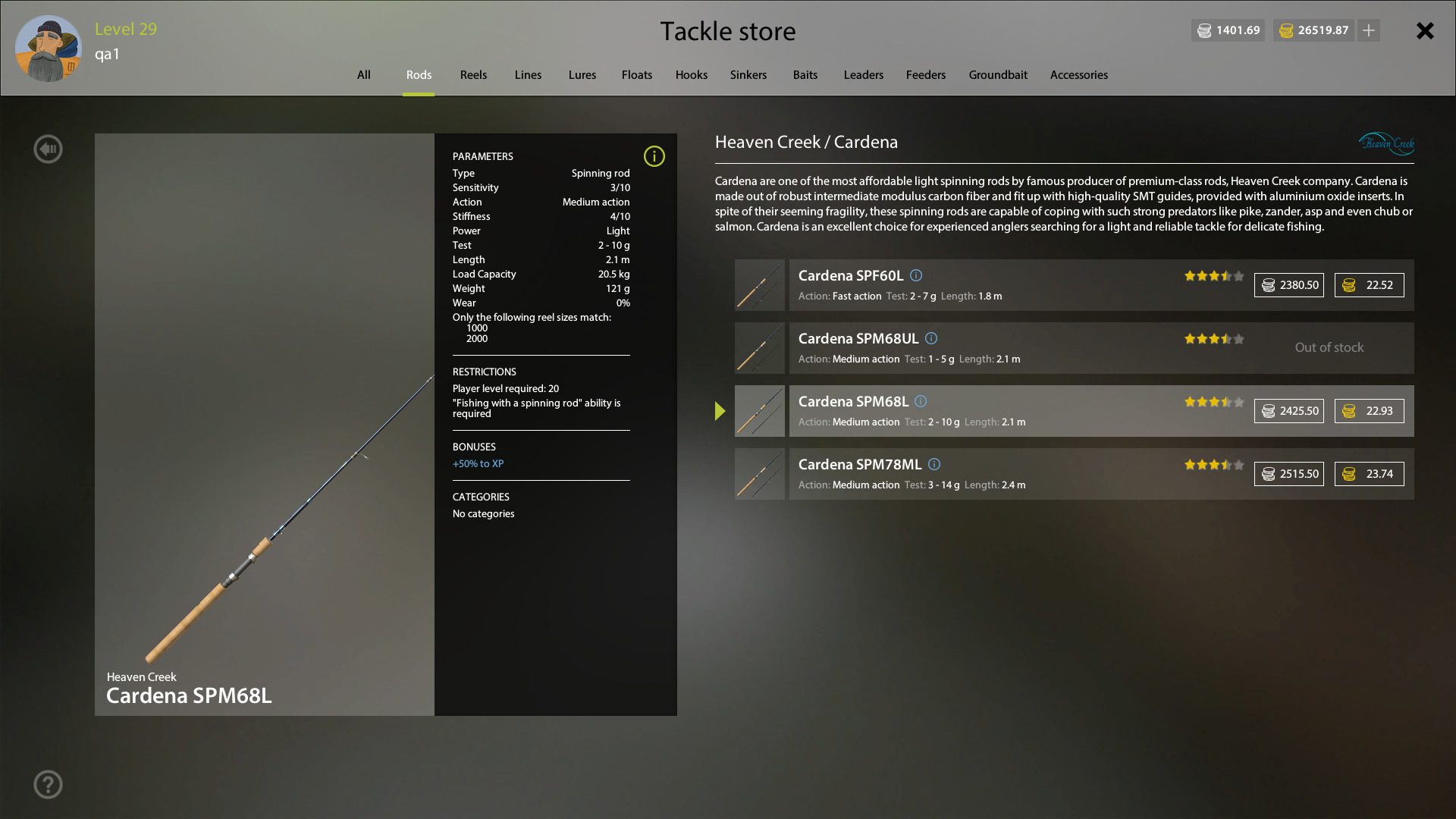
This card does not permit casting a 121 g rig or promise that you can land any fish weighing 20.5 kg. Rod weight does not become lure weight, and one component’s strength does not describe the capabilities of the entire setup. For the casting check here, use the 2–10 g range.
Include every component, not just the jig head
A rig is the way tackle is assembled for a particular fishing method. In a jigging rig, the jig head, a weighted hook, and the soft artificial lure may be separate items. The number on the head therefore does not automatically describe everything being cast. Open the rod you have actually assembled and read the installed components’ entries.
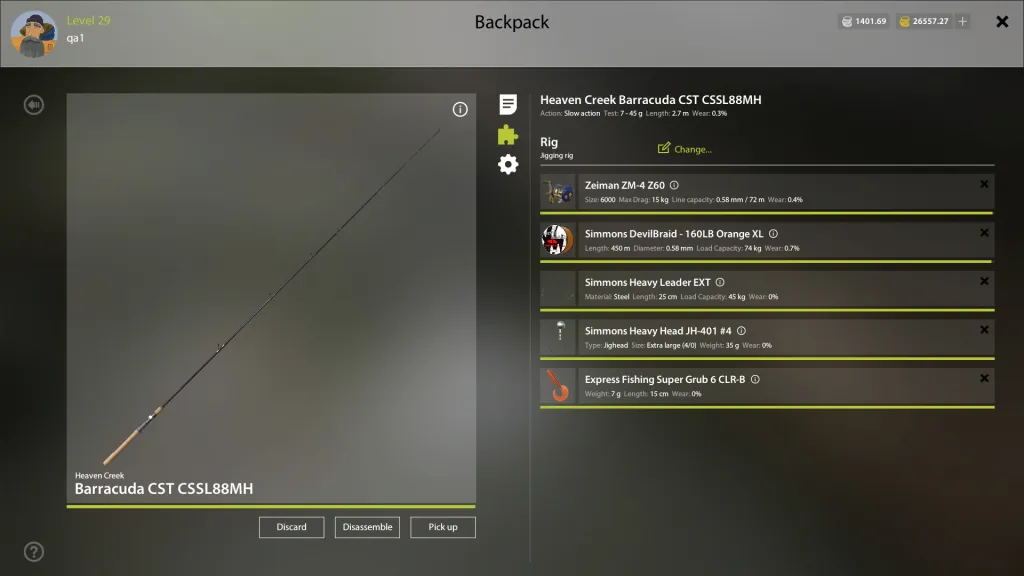
In the full-size original setup, Simmons Heavy Head JH-401 #4 shows Weight: 35 g, while Express Fishing Super Grub 6 CLR-B shows Weight: 7 g. Those two components already add up to 35 + 7 = 42 g. This is our calculation from two displayed entries, not a complete rig weight reported by the game. It does not account for the other components’ weights.
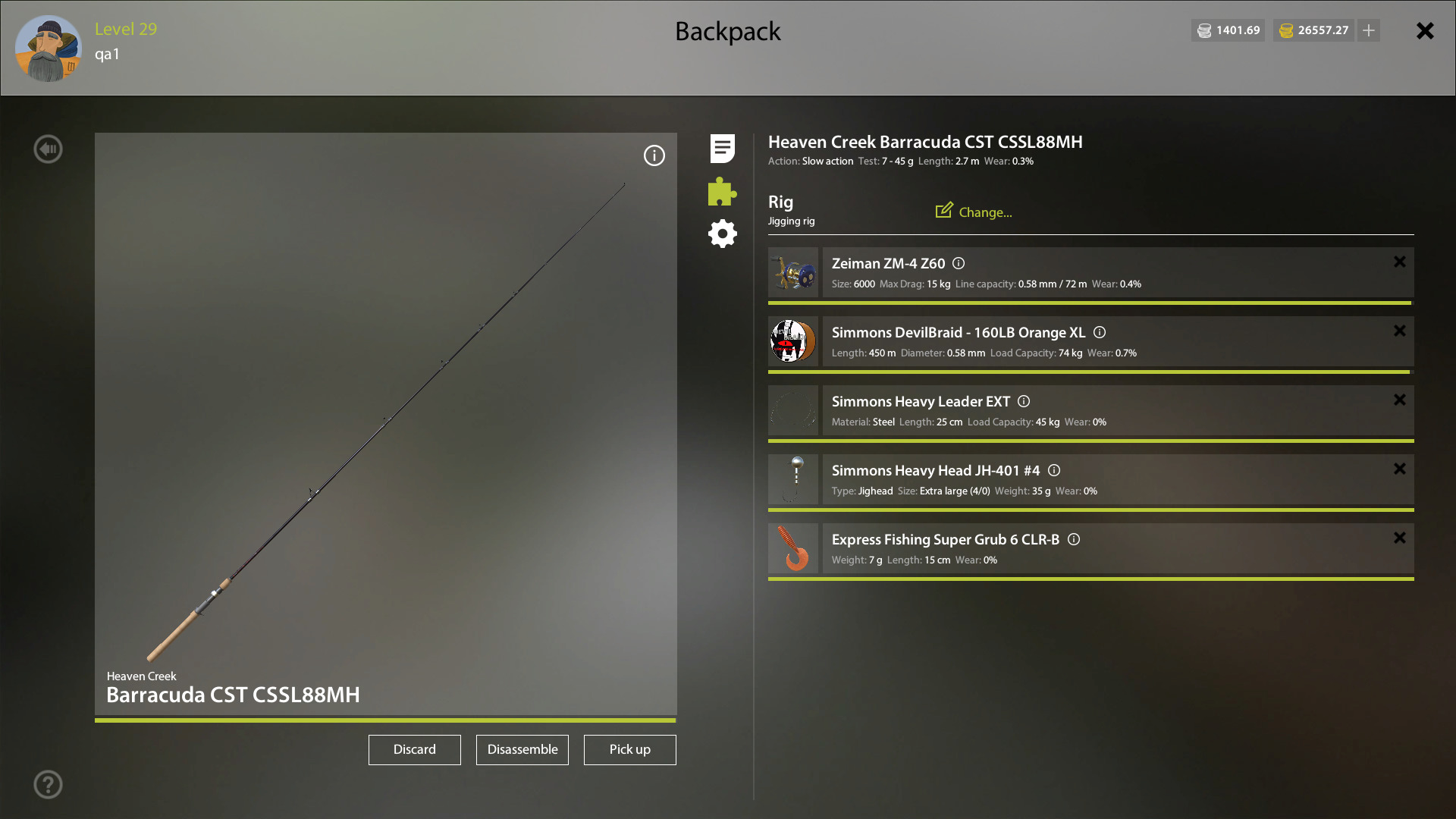
The rod at the top of the second frame has a 7–45 g range. Although 42 g falls within it, that sum alone does not confirm that the entire rig fits: you would need all the components relevant to the cast. Do not apply it to the Cardena in the first frame either; that rod has a different range, 2–10 g. A label saying only “35 g head” is not enough to check the setup.
If the jig head’s numbers are confusing, read our guide to hook size, model numbers and weight. The #4 in the name, 4/0 in the Size row and 35 g in the Weight row serve different purposes. To check the rod’s casting range, you need weight with its unit.
Being within the range does not guarantee a long cast
Matching the range is one part of checking casting distance. The official guide also lists rod and reel properties, line type, rig weight and aerodynamics, tackle condition, the character’s energy and relevant skill development. A short cast after changing a lure therefore does not prove that the reel is faulty. First compare the conditions and properties that actually changed.
You cannot turn a 2–10 g range into an exact distance in metres or declare one weight best for every setup. To assess a lure’s effect, record its full name and weight along with the rod and reel, then compare attempts under clear, comparable conditions. Someone else’s casting record is no substitute for your setup’s properties.
Check three fields before buying
Write down the rod’s Test, the weights of the rig components you need and Load Capacity as a separate strength property. Record the rod’s own Weight separately. If your chosen reel has its own casting weight range, read that too: the guide specifically draws attention to this property on baitcasting reels. After fitting the parts, reopen the setup you will use and check the actual items installed.
Start with your intended use and rig weight, then compare them with the casting range. Do not buy a stronger rod just hoping to fix every short cast: check whether it suits your lures and the rest of the tackle. Archived screens help explain the fields; before buying, check the specific model’s current properties, requirements and price in your own game client.