
Your alliance sleeps while you play: a hidden brake on Doomsday progress
Might and member count cannot show whether a team suits you. Four observations over a week reveal why you miss events and whether changing alliances would help.
Published · Updated
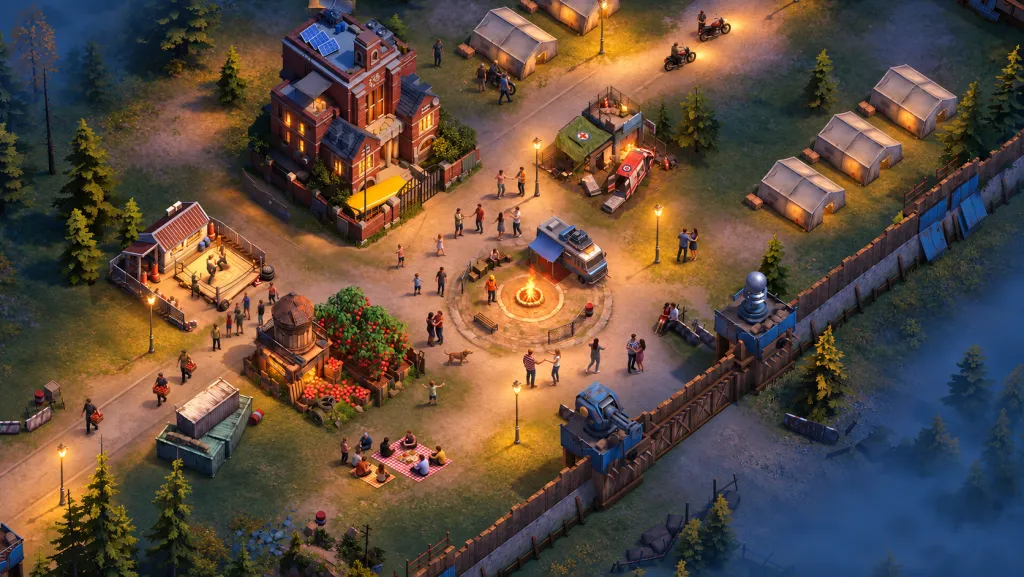
An alliance can slow your progress in Doomsday: Last Survivors even when its Might looks impressive. Help, group expeditions and events you can actually attend matter more. One ordinary week of play can reveal what your team is missing.
When alliance life happens while you sleep
In June 2026, an active player looked for a new alliance on Reddit. After six months in Russian-speaking teams, their events fell between 1 a.m. and 5 a.m. in his local time. The problem was the schedule. Replies suggested first stating the hours he could play in UTC.
A language or flag cannot tell you the schedule. An international alliance may gather at convenient hours, while a team from your own country may play when you are busy. Ask for specific event times in UTC and convert them to your local time.
Where progress gets lost between logins
In another thread about stalled progress, a newcomer described scattered hero development and confusing events. Replies suggested checking alliance activity, associating it with frequent joint attacks and quick help responses. That is their experience, rather than a promise that every account will progress at the same rate.
In a discussion by a player at 45 days, participants highlighted event rewards, gifts and alliance technology. The author belonged to an active team but did not always understand its plans or his role. A place on the member list was not enough.
Distinguish two situations: the team rarely gathers, or events take place but you hear about them late and do not understand the task. In the second case, talk to an officer first.
A hundred members — how many actually play?
A recruitment and merger post reported roughly 60 active players among 118 members. This is one team's example, but it illustrates the weakness of total membership as a guide: it cannot tell you how many people will attend an event alongside you.
In version 1.53.0, dated 13 January 2026, IGG described eligibility for Archipelago Raid, Island Raid and Jungle Crisis based on the actual number of active members. This rule concerns those events. Check current requirements and registration rejections in your client. If the team suggests dismissing troops for easier opponents, first read how eligibility differs from Rating and matchmaking.
Observe whether the team gathers at the announced time, who explains tasks and whether enough people attend. One missed evening proves little. Start with a week; if a major event does not fall within it, extend the observation.
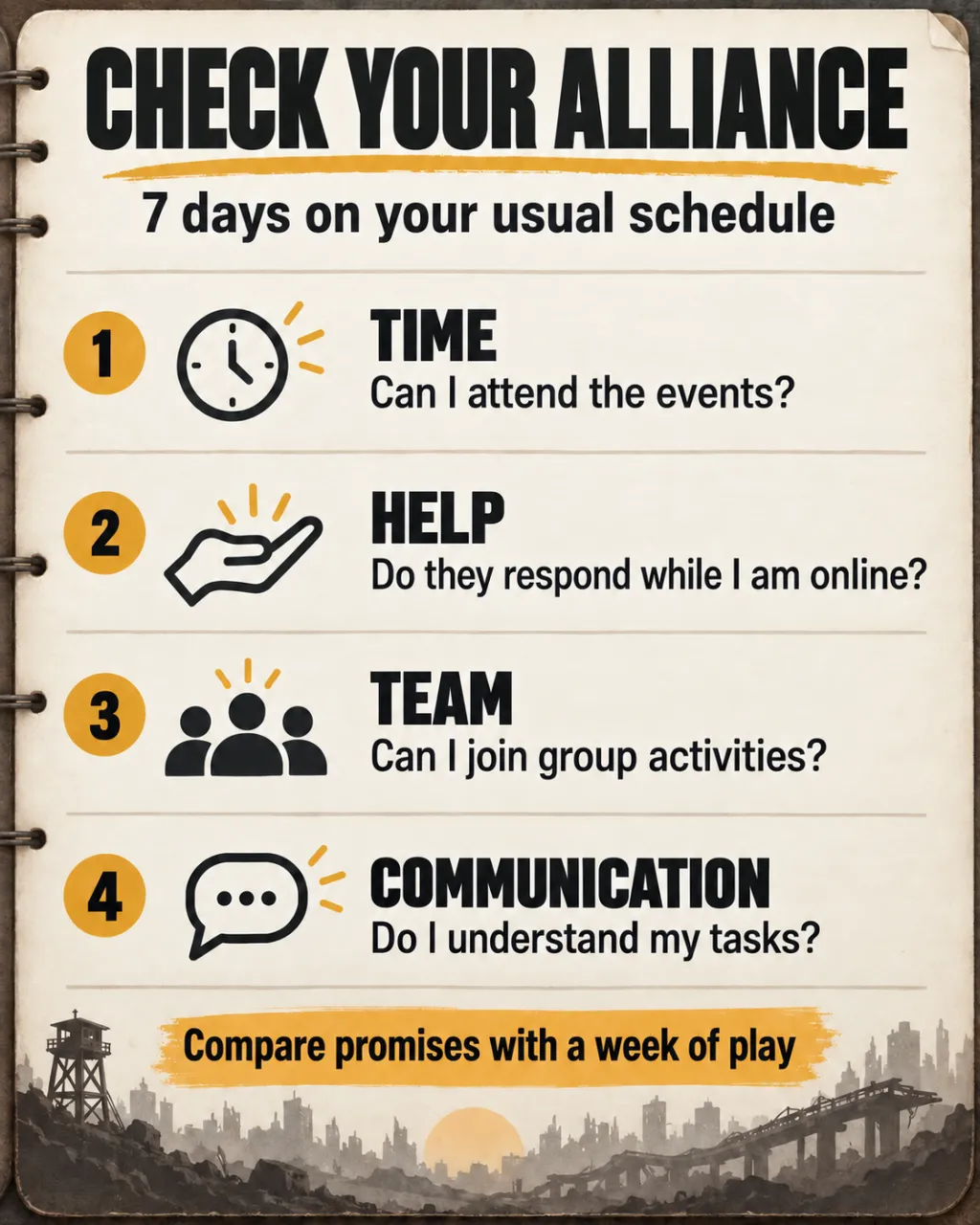
Four notes over seven days
Play your usual schedule and keep four short notes. Special late-night logins would distort the result: you are testing whether the alliance fits your ordinary routine.
Time. Which events took place, and which did you attend? For missed events, record the reason: inconvenient timing, a late announcement, personal commitments or participation restrictions.
Help. How does the team respond to your requests while you are online? Compare several sessions and record whether you helped others too.
Team. How many group expeditions could you join? If none, what prevented it: timing, requirements or nobody organizing a group?
Communication. Do you know where to go and what is expected before the fight? If the task only becomes clear in battle, ask where plans are posted and who answers questions. Water War delivery and escort illustrates why task allocation matters: personal kills do not describe the whole contribution to a team result. The Archipelago example of new towers and reinforcements explains how uncoordinated advances add defensive pressure.
At the end of the week, identify the main recurring reason for missing activities. For example, tasks are clear and people attend, but start times clash with work. You need a compatible schedule, rather than a higher alliance rank.
What to ask before moving
Ask the new team's officer about upcoming event times in UTC, the role for a player at your level and participation requirements. Clarify activity expectations, spending expectations and how to report an absence. Compare the answers with your routine.
Ask how shared rewards are distributed and mistakes reviewed. Request a description of an ordinary week: concrete plans say more than a promise of fast progress. Before purchases, separately check the Alliance Vault setting and Gold distribution arrangements.
Arrange a place in the new team before leaving, and check restrictions on moving, including current events. If another region is needed, investigate migration separately: it is a different action from changing alliances. The review of the post-registration alliance binding plan explains why registration with the old alliance cannot be assumed to cancel automatically after moving.
When changing teams will not solve the problem
A new team cannot fix scattered hero development. If resources go into rarely used heroes, review your lineup first. The article on Heroic Legacy examines one way to redistribute earlier investment.
A stricter schedule cannot create more free time either. Choose team activities you enjoy and are willing to attend regularly.
The useful outcome is a specific cause: too few players, unsuitable hours, unclear tasks or no personal development plan. You can take that finding to your current officers or use it to choose another team.
Sources
- Reddit — active player seeks an alliance because events fall between 1 a.m. and 5 a.m. locally
- Reddit — Continue with this game or quit: stagnation, hero development and alliance activity
- Reddit — player at 45 days discusses progress and group rewards
- Reddit — Alliance Recruiting/Merger: around 60 active players among 118 members
- IGG — Doomsday App Store version history: activity and event eligibility
- IGG — official Shelter game image in the Steam gallery