
Another tower, another front: a Doomsday Archipelago mistake
A strong garrison is not enough if nobody can support the new position. Two game screens and four team agreements help you assess an Archipelago advance.
Published · Updated
Another tower in Doomsday's Archipelago is another position to support. A strong defender alone cannot supply reinforcements or arrange the next shift. Our alliance activity guide explains why shared playing hours and clear tasks matter. Here is how to assess whether your team is ready to expand its front.
What went wrong in the G26 account
In a video published on 18 October 2026, The Strategy Guy reviews his own Archipelago campaign. He says the team built towers without enough support, spent troops and ran short of cement, a construction resource. Later, rather than holding a narrow passage, members advanced again while some leaders were absent.
This is a participant's explanation, not proof of the single cause of defeat. We do not know whether a different decision would have produced a win. It does, however, raise a useful question for R4 officers and the R5 leader: who will support the new position once it is built? We have a strong player is not yet a plan.
303,750 capacity is not a ready march
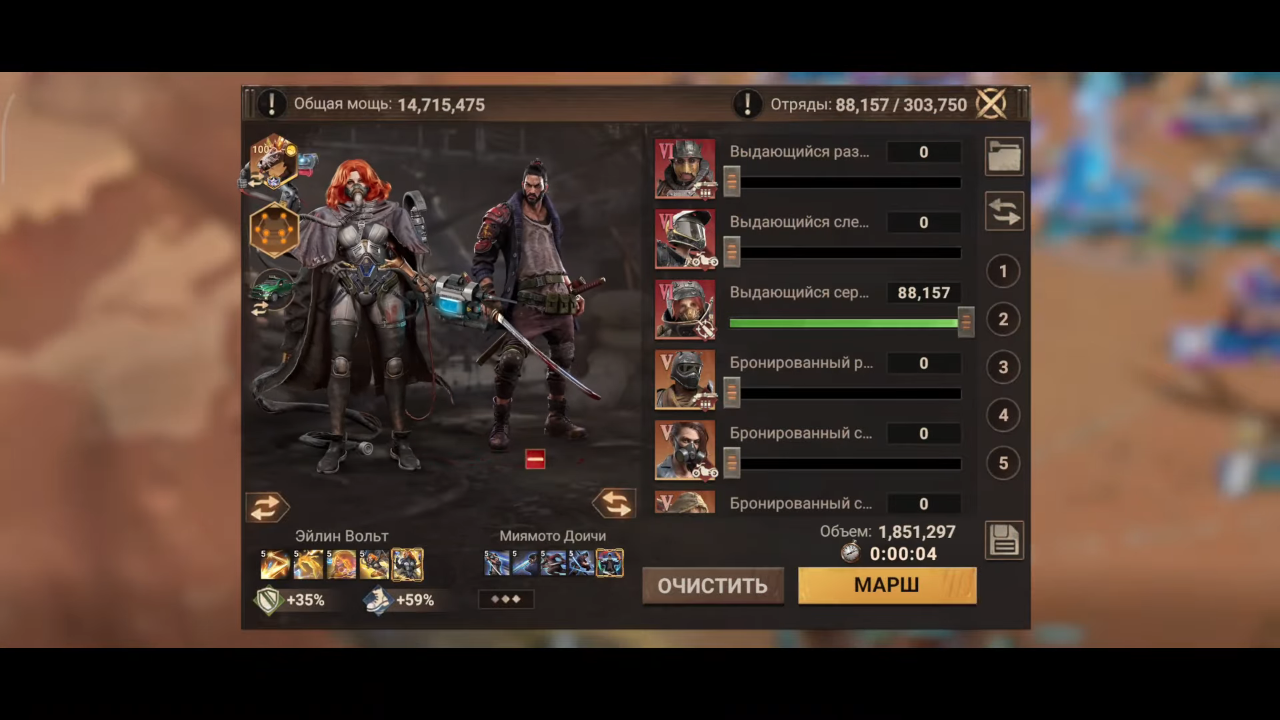
The march preparation screen around 15:07 shows 88,157 selected out of 303,750. The first number is the selected troop count; the second is this march's capacity. The difference is 215,593 places. That is simple subtraction of the displayed values, not a confirmed number of troops the creator could add.
The original shows preparation: the March button is still on screen. It does not confirm departure, arrival or the account's entire available army. Open this video sequence.
Open the march preparation screen at full size.
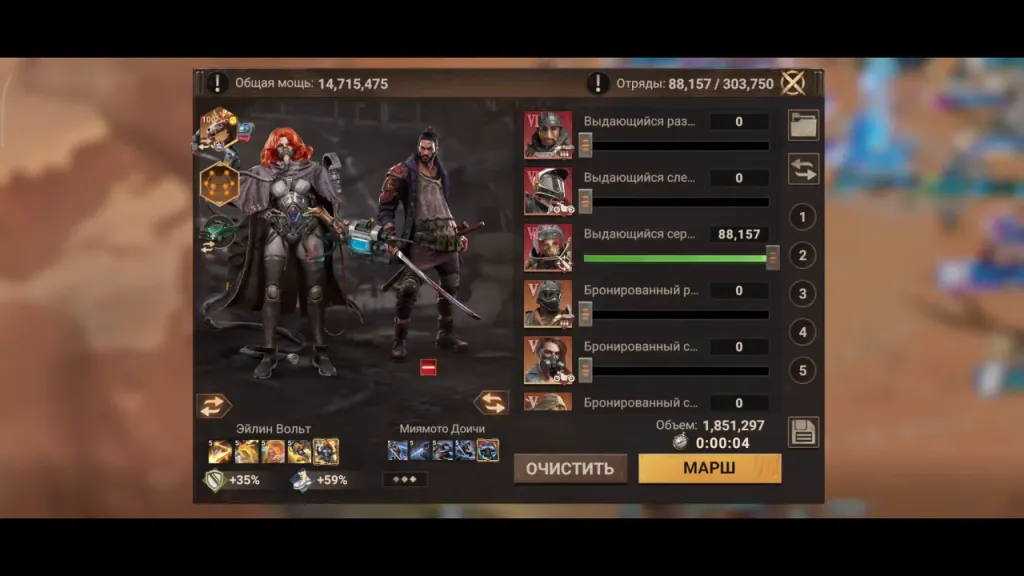
Before starting another construction, ask about more than maximum capacity. You need named participants, suitable squads and arrival times. Reinforcements are squads sent to support an object's defense; a garrison is the squad defending it. Capacity does not tell you how many suitable troops will actually arrive before the next attack.
Agree which troops are reserved to replenish the defense and which can be used elsewhere. That is your team's allocation of tasks. The troop type chosen by the video creator is not automatically best for every lineup, hero or opponent.
Watch the next attack, not only the current bar
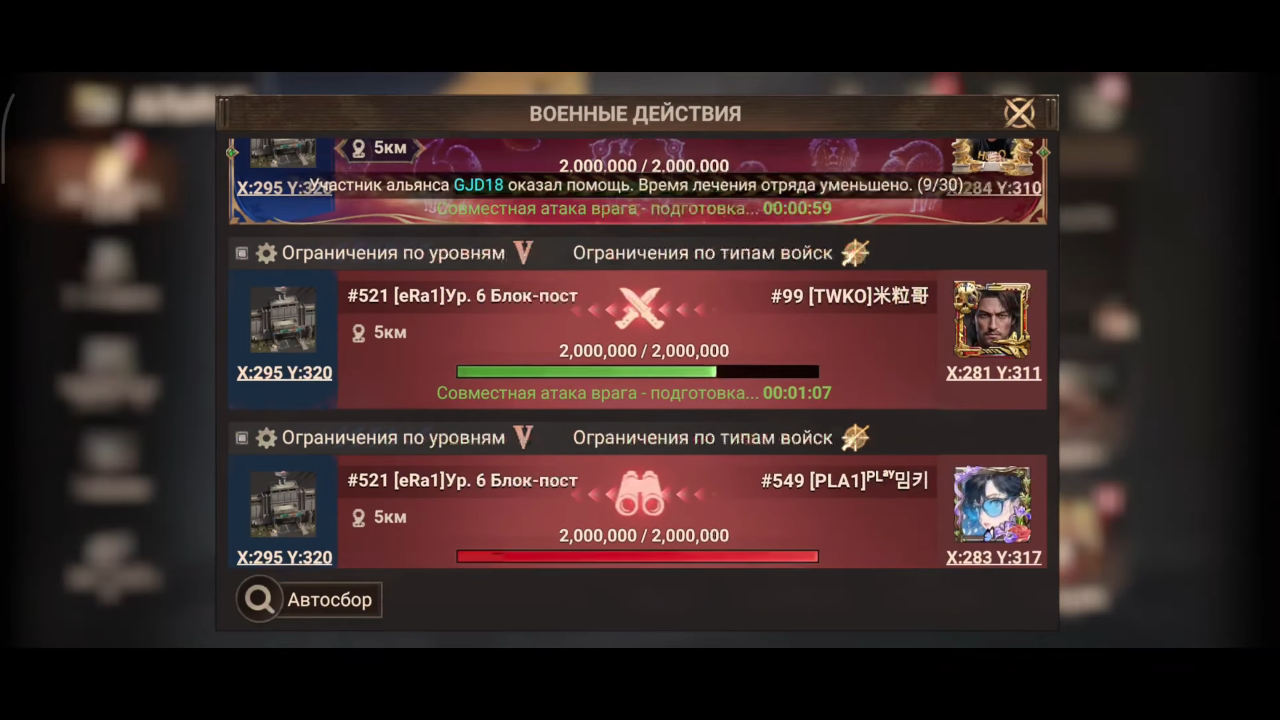
Around 15:17, the military actions panel shows two rows of enemy rally preparation. The middle row targets a level-six checkpoint. A rally is a joint attack by multiple squads. The upper and middle rows show 2,000,000 / 2,000,000: that is the attacking rally's filled troop capacity, not the defense's remaining durability.
One screenshot does not show the outcome of both attacks. Adding the rows into four million damage is incorrect: troop numbers and damage are different measures. Open the second video sequence.
Open the rally screen at full size.
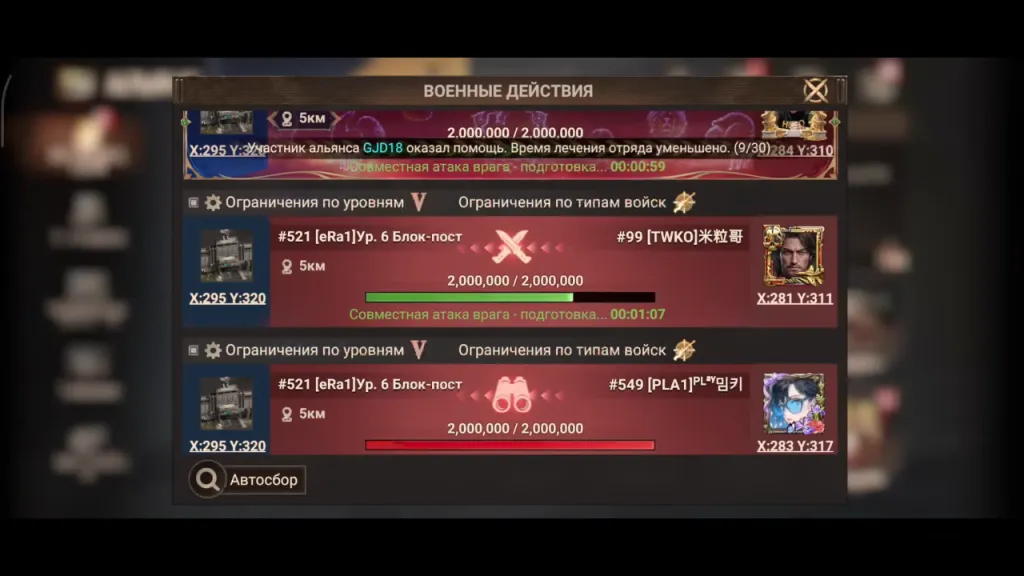
The sequence matters more when deciding whether to expand: which object is under attack, when the next hit is expected and whether support can arrive in time. If available players are already split between the old position and a new tower, a good current report does not show that both are ready for the next attack.
Four agreements before another tower
Defensive line. Name the position the team is holding and the condition for the next advance. For example, build farther only after the assigned defenders assemble. This is a suggested team agreement, not an undisclosed game requirement.
Support. Who leads the garrison, who sends reinforcements and who watches incoming rallies? Separately check how much construction stock will remain after the new position. Another team's cement total is not a universal budget.
Handover. Who takes over when the current officer logs off? Give that person the defensive line, immediate threats and already assigned squads. Keep going leaves too much room for conflicting interpretations.
Stop condition. Agree in advance which observable condition means new construction stops and the defense regroups at the previous line. That avoids choosing between conflicting orders after a battle has started.
If someone proposes dismissing troops for an easier opponent instead of making a plan, separate those questions. Preparing a front does not reveal the matchmaking algorithm. Our troop dismissal and matchmaking analysis explains which conclusions the official changes actually support.
The original analysis was reviewed on 20 October 2026 using published footage and the creator's account. The client version and exact recording date are unknown. A map frame shows 17 October UTC, or Coordinated Universal Time. This is a decision-making example, not the current cycle's schedule. Before advancing, get four specific answers: where to hold, who supports it, who takes over and when to stop.