
Grey Blades in Watcher of Realms: the conditions behind Sync
Attacking across the map has conditions. How Sync works, what the four heroes do, and what the archived October summon windows actually covered.
Published · Updated
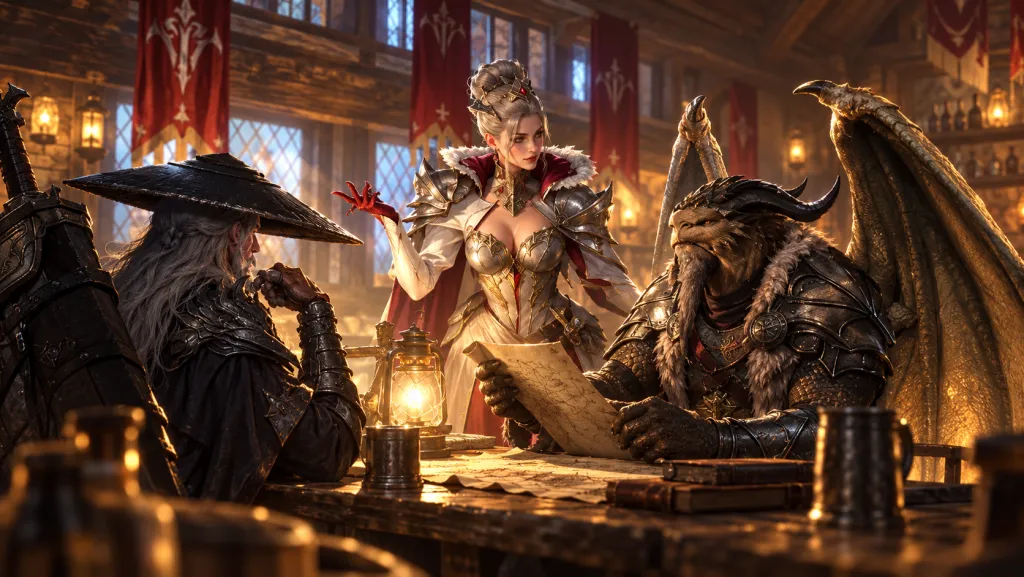
The Grey Blades can trigger Sync beyond ordinary range, but that does not turn every hero attack into a map-wide shot. In the official faction introduction, the developer ties the interaction to allies’ skills and specific conditions. Here is how to read that chain and choose a hero for a team. The October summon dates below are an archived schedule, not currently open windows.
What triggers Sync
Sync is a skill interaction through which faction heroes supplement each other’s attacks. The official diagram highlights frequent triggers, distance-independent Syncs enabled by marks or similar effects, and additional damage to targets within allies’ ATK Ranges.
The crucial condition is marks or similar effects. They enable the distant Sync interaction; this does not establish that a hero can hit any enemy with an ordinary Basic ATK. An ally’s attack area still matters because the diagram describes eligible targets within it.
For example, an enemy may be far from the main damage dealer but inside an ally’s ATK Range. First find the skill effect linking that target to Sync. Without the necessary effect or its conditions, faction membership alone does not establish a distant hit. This is an example of reading the description, not our battle result.

Open the full-size original card
Four heroes, four roles
A Lord has a special faction skill. The official overview identifies Amelia Ainsworth and Galloway as Lords. That role differs from the main damage dealer: owning a strong attacker does not explain who supports the full chain.
Amelia Ainsworth is presented as a Sync Lord and team buffer. The overview highlights increased Sync frequency, so judge her by the interaction she would support in your lineup.
Garroq is the core Sync DPS, with the developer highlighting two- or three-target situations. His card carries two faction emblems. A favourable multi-target scenario does not imply an equal result in every single-target battle. If Amelia is missing, see where Garroq can help without the Legendary Lord: his own kit and a full faction cycle are different layers.
Rorkesh supplies secondary Sync damage and buffs. His kit includes a summon and coordinated attacks alongside it. Look at the function he adds, not only whether he replaces a familiar attacker. Check his Ultimate’s range and the Black Hand’s buff recipient; those conditions matter more than a general map-wide claim.
Galloway is a Sync Lord who can trigger Sync regardless of distance and reduce a target’s damage. Allies’ Syncs shorten his own Sync cooldown. A cooldown is the wait before another trigger; shortening it is not the same as an instant, uninterrupted attack.

Open the full-size original card
What to check before spending crystals
Start with one problem: which battle can your current lineup not clear? Then open the desired hero’s and future allies’ skills. You need a clear chain—who triggers, who gets an additional action, and against which target—not merely four matching faction emblems.
1. Trigger condition. Write down the effect and the action activating it. Do not replace the exact condition with the general word synergy.
2. Eligible target. Check whose ATK Range covers the enemy, which marks are required, and any limits of the specific skill.
3. Frequency. Find the cooldown and how it can be reduced. A fast hero helps the chain only when the interaction’s conditions are met.
4. Compare with your team. Keep difficulty, gear and development levels comparable in a test battle. Track survival and the stage objective as well as total damage. Someone else’s record is not a forecast for your account. For the fourth slot and reported comparison results, see the Fallen Covenant test analysis.
The archived October schedule: separate windows
The official poster listed Garroq and Rosalia for October 9–12; Amelia Ainsworth and Sergei for October 10–12; Rorkesh and Corven for October 16–19. Galloway’s Shard Summon was listed for October 5–19. The overall event programme was separate: October 8–19, 2026, UTC−8. These windows have ended.
An overall event period does not extend an individual summon window. The poster does not give each banner’s exact hours; its date range cannot replace a specific timer and rules screen. A Shard Summon uses the relevant collection system, and the poster alone cannot establish whether your shards or resources are sufficient. To compare these events with Sun Wukong, check his hero guarantee and Golden Immortal acquisition route: summon and Aspect exchange deadlines differ.

Open the full-size original card
If you can choose only one hero, identify the missing role first. A Lord, main damage dealer, and support solve different problems. A useful choice starts with a working interaction and a battle you can attempt; a map-wide promise alone cannot make it.